Bibimbap – The Colorful Harmony Bowl
Bibimbap – The Colorful Harmony Bowl
Bibimbap – The Colorful Harmony Bowl
Bibimbap – The Colorful Harmony Bowl
Bibimbap – The Colorful Harmony Bowl
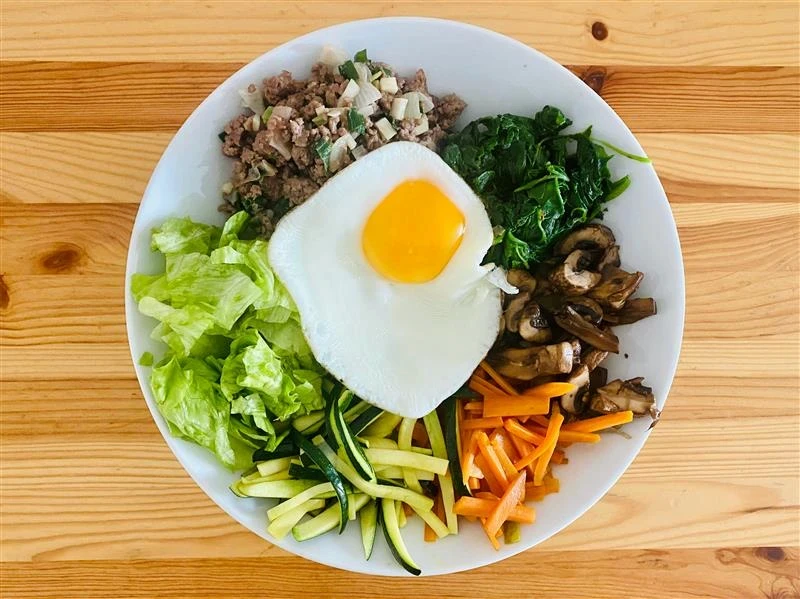
Bibimbap (비빔밥), which literally translates to “mixed rice,” is one of Korea’s most visually stunning and nutritionally balanced dishes. It combines steamed rice with a variety of seasoned vegetables, sliced meat (often beef), a fried egg, and a generous dollop of gochujang (red chili paste). What makes Bibimbap remarkable is not only its taste but also its symbolism: each ingredient represents a different color, texture, and flavor, creating a harmony that mirrors balance in life.
Bibimbap (비빔밥), which literally translates to “mixed rice,” is one of Korea’s most visually stunning and nutritionally balanced dishes. It combines steamed rice with a variety of seasoned vegetables, sliced meat (often beef), a fried egg, and a generous dollop of gochujang (red chili paste). What makes Bibimbap remarkable is not only its taste but also its symbolism: each ingredient represents a different color, texture, and flavor, creating a harmony that mirrors balance in life.
Bibimbap (비빔밥), which literally translates to “mixed rice,” is one of Korea’s most visually stunning and nutritionally balanced dishes. It combines steamed rice with a variety of seasoned vegetables, sliced meat (often beef), a fried egg, and a generous dollop of gochujang (red chili paste). What makes Bibimbap remarkable is not only its taste but also its symbolism: each ingredient represents a different color, texture, and flavor, creating a harmony that mirrors balance in life.


(4.0/5)
(4.0/5)
(4.0/5)
Price:
Price:
Price:
₹600–₹1,200
₹600–₹1,200
₹600–₹1,200
Available
Available
Available
Origins
Key Ingredients
Taste and Experience
Preparation Method
Cultural Importance
The exact origins of Bibimbap are debated, but historical records suggest that it has been around for several centuries. Some say it was a way for royal families during the Joseon Dynasty to enjoy a complete meal in one bowl, while others argue it originated from farmers who mixed leftover side dishes with rice for convenience.
Another popular theory is that Bibimbap was a dish prepared during rituals or ancestral offerings. After ceremonies, the various foods placed on the altar were mixed together into a single bowl for sharing. This act reflected a deep sense of communal harmony and respect for ancestors. In the 20th century, Bibimbap gained fame as a health food because it incorporates all five colors of Korean philosophy: green (wood), red (fire), yellow (earth), white (metal), and black (water). Each color corresponds to a natural element, and their presence in food was believed to balance the body’s energy. Today, Bibimbap is not only a traditional meal but also a symbol of Korea’s “harmony in diversity.”
Origins
Key Ingredients
Taste and Experience
Preparation Method
Cultural Importance
The exact origins of Bibimbap are debated, but historical records suggest that it has been around for several centuries. Some say it was a way for royal families during the Joseon Dynasty to enjoy a complete meal in one bowl, while others argue it originated from farmers who mixed leftover side dishes with rice for convenience.
Another popular theory is that Bibimbap was a dish prepared during rituals or ancestral offerings. After ceremonies, the various foods placed on the altar were mixed together into a single bowl for sharing. This act reflected a deep sense of communal harmony and respect for ancestors. In the 20th century, Bibimbap gained fame as a health food because it incorporates all five colors of Korean philosophy: green (wood), red (fire), yellow (earth), white (metal), and black (water). Each color corresponds to a natural element, and their presence in food was believed to balance the body’s energy. Today, Bibimbap is not only a traditional meal but also a symbol of Korea’s “harmony in diversity.”
Origins
Key Ingredients
Taste and Experience
Preparation Method
Cultural Importance
The exact origins of Bibimbap are debated, but historical records suggest that it has been around for several centuries. Some say it was a way for royal families during the Joseon Dynasty to enjoy a complete meal in one bowl, while others argue it originated from farmers who mixed leftover side dishes with rice for convenience.
Another popular theory is that Bibimbap was a dish prepared during rituals or ancestral offerings. After ceremonies, the various foods placed on the altar were mixed together into a single bowl for sharing. This act reflected a deep sense of communal harmony and respect for ancestors. In the 20th century, Bibimbap gained fame as a health food because it incorporates all five colors of Korean philosophy: green (wood), red (fire), yellow (earth), white (metal), and black (water). Each color corresponds to a natural element, and their presence in food was believed to balance the body’s energy. Today, Bibimbap is not only a traditional meal but also a symbol of Korea’s “harmony in diversity.”

Planning a visit to Spice Platter is easy and hassle-free. We’re proudly located on Silk St., Barbican, London, right in the heart of the city, with convenient parking nearby and excellent public transport connections.
Quick Links


Follow Us


Planning a visit to Spice Platter is easy and hassle-free. We’re proudly located on Silk St., Barbican, London, right in the heart of the city, with convenient parking nearby and excellent public transport connections.
Quick Links
Follow Us
Planning a visit to Spice Platter is easy and hassle-free. We’re proudly located on Silk St., Barbican, London, right in the heart of the city, with convenient parking nearby and excellent public transport connections.
Quick Links
Follow Us
© 2025 Bennie Restuarant & Bar. Technology by Protocloud Technologies Pvt. Ltd.
© 2025 Bennie Restuarant & Bar. Technology by Protocloud Technologies Pvt. Ltd.
© 2025 Bennie Restuarant & Bar. Technology by Protocloud Technologies Pvt. Ltd.