Ramen (ラーメン) – Japan’s Comforting Noodle Soup
Ramen (ラーメン) – Japan’s Comforting Noodle Soup
Ramen (ラーメン) – Japan’s Comforting Noodle Soup
Ramen (ラーメン) – Japan’s Comforting Noodle Soup
Ramen (ラーメン) – Japan’s Comforting Noodle Soup
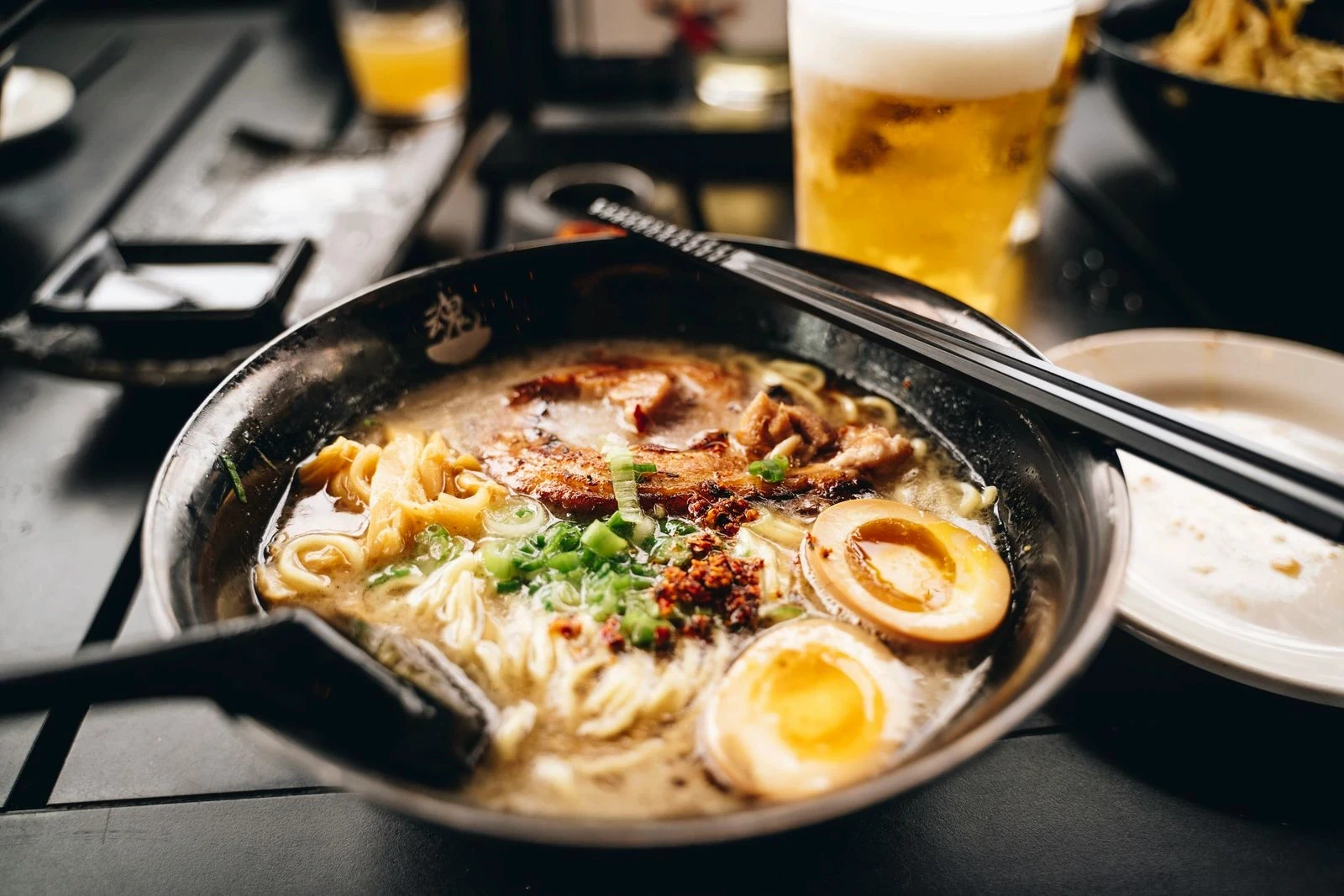
Ramen is one of Japan’s most beloved and globally recognized dishes. It is a comforting bowl of wheat noodles served in a flavorful broth, topped with various garnishes like sliced pork, boiled eggs, nori (seaweed), and vegetables. Unlike traditional Japanese cuisine that emphasizes simplicity, ramen is hearty, rich, and customizable. It is often considered Japan’s answer to soul food, a dish that warms both the body and the spirit.
Ramen is one of Japan’s most beloved and globally recognized dishes. It is a comforting bowl of wheat noodles served in a flavorful broth, topped with various garnishes like sliced pork, boiled eggs, nori (seaweed), and vegetables. Unlike traditional Japanese cuisine that emphasizes simplicity, ramen is hearty, rich, and customizable. It is often considered Japan’s answer to soul food, a dish that warms both the body and the spirit.
Ramen is one of Japan’s most beloved and globally recognized dishes. It is a comforting bowl of wheat noodles served in a flavorful broth, topped with various garnishes like sliced pork, boiled eggs, nori (seaweed), and vegetables. Unlike traditional Japanese cuisine that emphasizes simplicity, ramen is hearty, rich, and customizable. It is often considered Japan’s answer to soul food, a dish that warms both the body and the spirit.


(4.0/5)
(4.0/5)
(4.0/5)
Price:
Price:
Price:
₹400–₹900
₹400–₹900
₹400–₹900
Available
Available
Available
Origins
Key Ingredients
Taste and Experience
Preparation Method
Cultural Importance
Ramen originally came to Japan from China during the late 19th century. The earliest versions were called “Shina soba” (Chinese noodles), and they became popular among the working class for being filling and inexpensive. After World War II, ramen stalls spread across Japan, providing affordable and tasty meals during a time of food scarcity. Over the decades, ramen evolved into a cultural icon, with regional varieties like Hokkaido’s miso ramen, Kyushu’s tonkotsu ramen, and Tokyo’s shoyu ramen, each reflecting local tastes.
Origins
Key Ingredients
Taste and Experience
Preparation Method
Cultural Importance
Ramen originally came to Japan from China during the late 19th century. The earliest versions were called “Shina soba” (Chinese noodles), and they became popular among the working class for being filling and inexpensive. After World War II, ramen stalls spread across Japan, providing affordable and tasty meals during a time of food scarcity. Over the decades, ramen evolved into a cultural icon, with regional varieties like Hokkaido’s miso ramen, Kyushu’s tonkotsu ramen, and Tokyo’s shoyu ramen, each reflecting local tastes.
Origins
Key Ingredients
Taste and Experience
Preparation Method
Cultural Importance
Ramen originally came to Japan from China during the late 19th century. The earliest versions were called “Shina soba” (Chinese noodles), and they became popular among the working class for being filling and inexpensive. After World War II, ramen stalls spread across Japan, providing affordable and tasty meals during a time of food scarcity. Over the decades, ramen evolved into a cultural icon, with regional varieties like Hokkaido’s miso ramen, Kyushu’s tonkotsu ramen, and Tokyo’s shoyu ramen, each reflecting local tastes.

Planning a visit to Spice Platter is easy and hassle-free. We’re proudly located on Silk St., Barbican, London, right in the heart of the city, with convenient parking nearby and excellent public transport connections.
Quick Links


Follow Us


Planning a visit to Spice Platter is easy and hassle-free. We’re proudly located on Silk St., Barbican, London, right in the heart of the city, with convenient parking nearby and excellent public transport connections.
Quick Links
Follow Us
Planning a visit to Spice Platter is easy and hassle-free. We’re proudly located on Silk St., Barbican, London, right in the heart of the city, with convenient parking nearby and excellent public transport connections.
Quick Links
Follow Us
© 2025 Bennie Restuarant & Bar. Technology by Protocloud Technologies Pvt. Ltd.
© 2025 Bennie Restuarant & Bar. Technology by Protocloud Technologies Pvt. Ltd.
© 2025 Bennie Restuarant & Bar. Technology by Protocloud Technologies Pvt. Ltd.